The wrong grade costs morethan the right consultant.

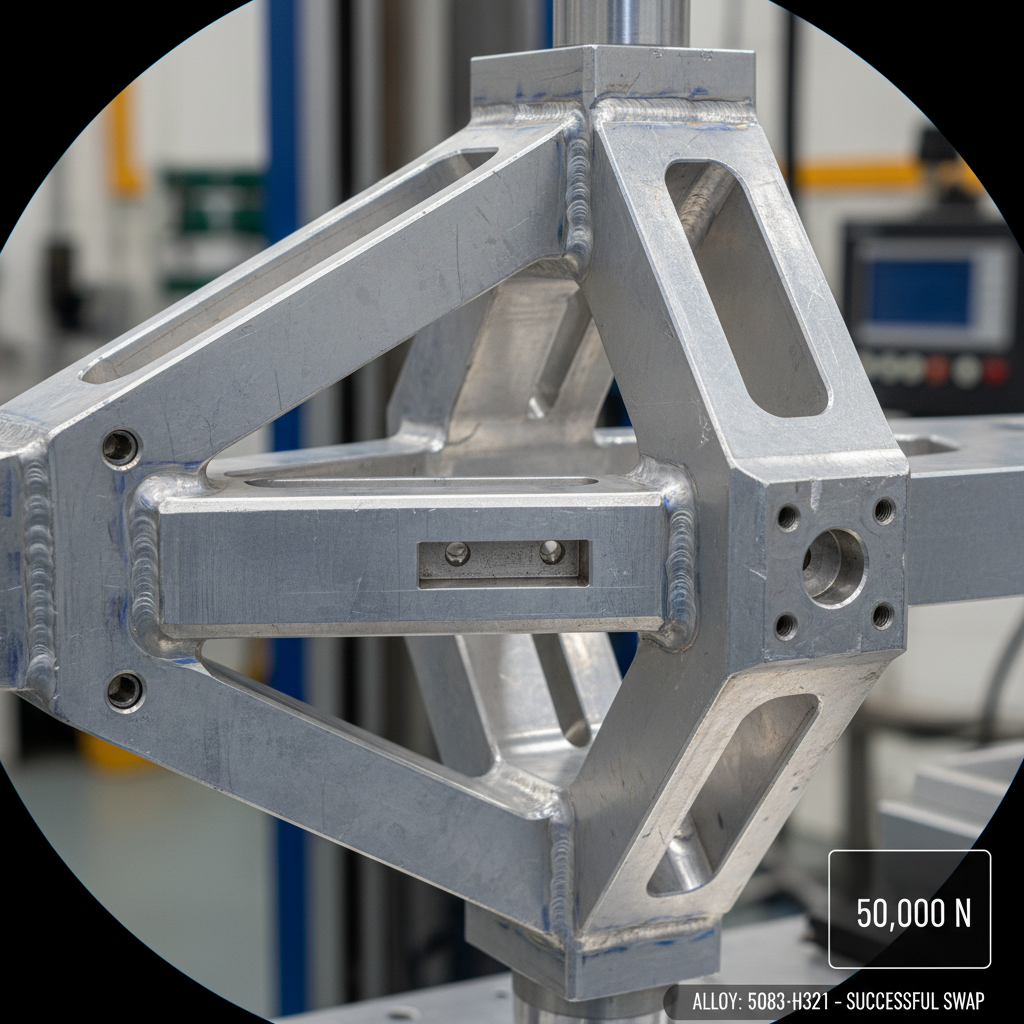
ACTUAL CLIENT ENGAGEMENT — AEROSPACE SUBCONTRACTOR — WICHITA, KS — 2024
From handshake to sign-off — every step documented.
Four phases. Four deliverables. Zero ambiguity about what you're paying for or what you'll receive.
Audit
Inventory & Failure Review
We map your current alloy inventory against actual failure history. Every stress crack, every rejected batch, every scrap event gets logged against the spec that caused it.
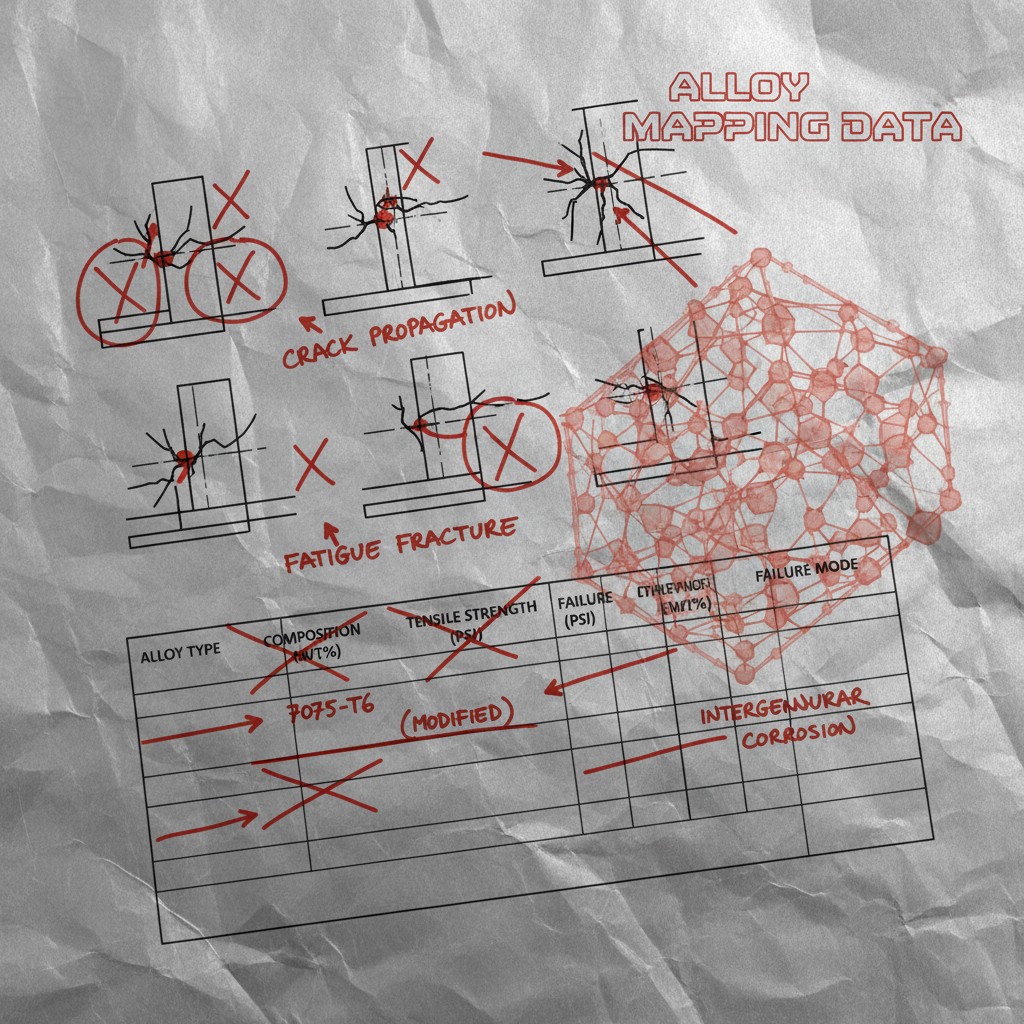
Alloy Failure Map
Deliverable: Alloy Failure Map — a documented matrix of your alloy series, tempers in use, and associated failure modes over 24 months of production data.
Specification
Grade-Temper-Supplier Matrix
We produce a prioritized recommendation matrix: the right alloy, the right temper designation, and a ranked shortlist of qualified suppliers — with the reasoning documented for your procurement records.
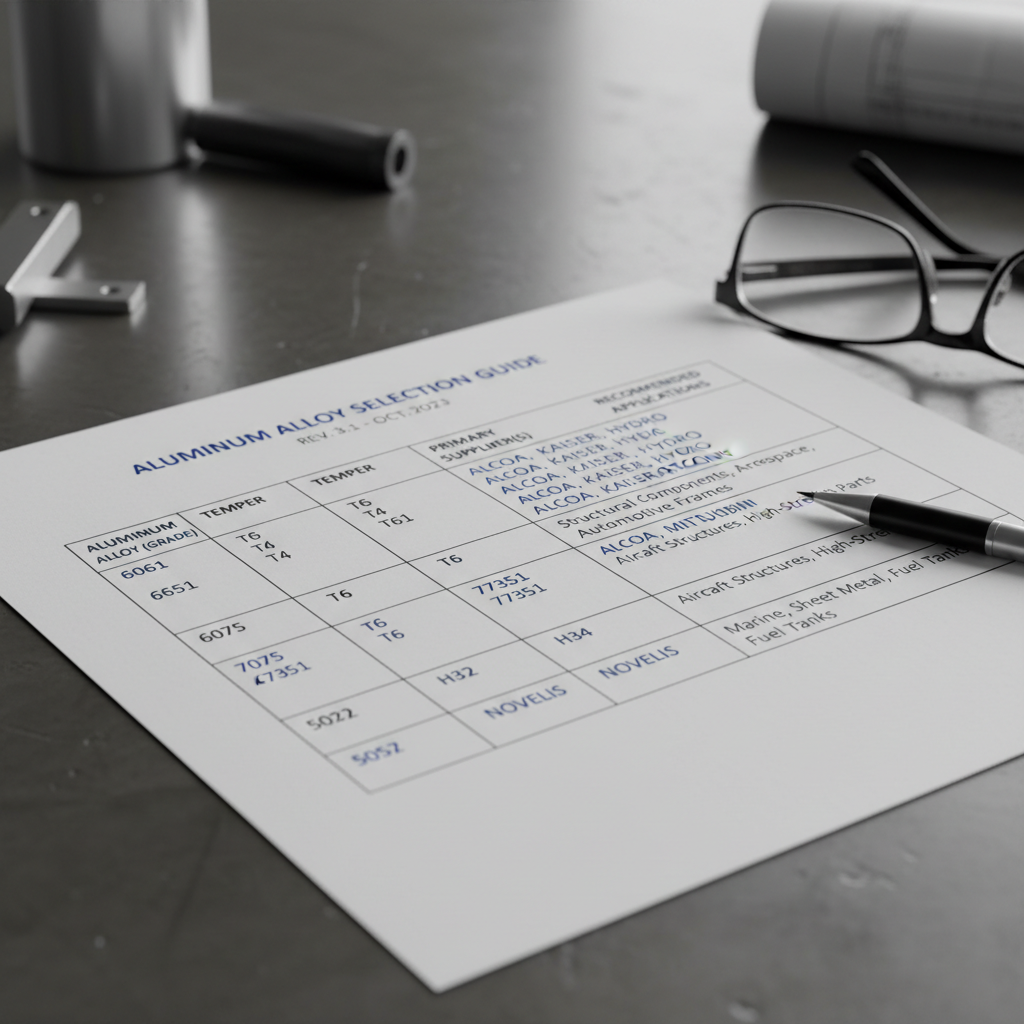
Specification Matrix
Deliverable: Specification Matrix — a cross-referenced table of recommended alloy-temper combinations, supplier qualifications, and mechanical property targets.
Sourcing
Mill Negotiation & Cert Verification
We sit across the table from the mill on your behalf. We read the MTRs, verify the chemistry against the callout, and flag anything that would fail incoming inspection before it ships.

Supplier Scorecard
Deliverable: Supplier Scorecard — rated assessments of 3–5 qualified mills covering lead time, certification compliance, yield consistency, and pricing leverage.
Validation
Mechanical Testing & Sign-Off
We don't close an engagement until the material proves out. We specify the test protocol, witness or review the tensile, hardness, and corrosion data, and issue a written sign-off tied to your part number.
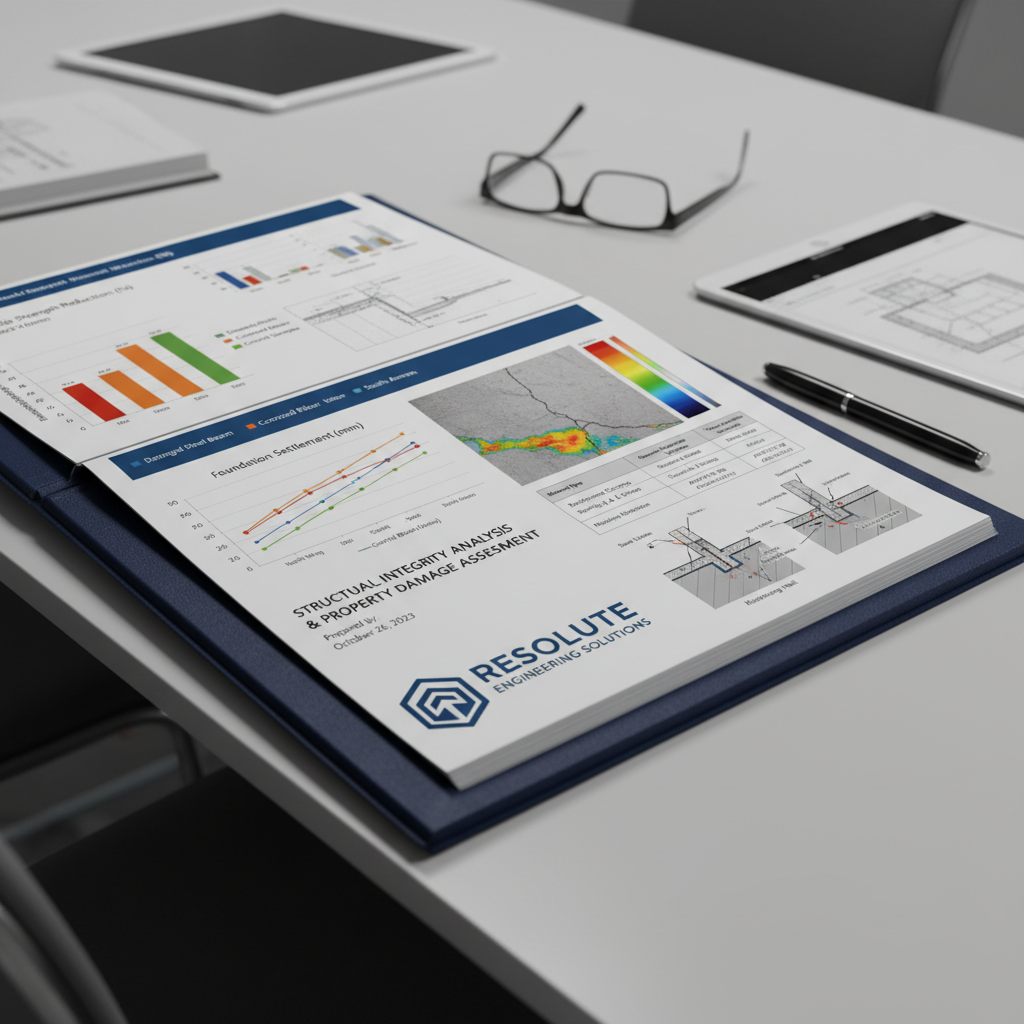
Test Report
Deliverable: Test Report & Sign-Off — witnessed tensile data, hardness mapping, and a written certification that the specified alloy meets your application requirements.
The cost of the wrong alloy is never just the scrap.
Average cost per misspecification event in aerospace subcontracting — including rework, scrap, and schedule impact.
Median scrap rate increase when a packaging firm substitutes 3003 for 5052 in draw-and-iron applications.
Complete coverage across all commercial aluminum series — from commercially pure 1100 to aerospace-grade 7075.
Across all automotive lightweighting engagements where alloy and temper were both corrected.
Grade Your Current Spec
Five questions. Two minutes. A personalized Alloy Risk Score with a specific summary of your specification exposure — before you talk to anyone.
Ready to assess your spec?
This five-question diagnostic takes two minutes. You'll receive a personalized Alloy Risk Score and a written summary of your specification exposure — no contact details required.
No contact details required to receive your score. — Results are not stored or shared.
The spec was wrong. Now it isn't.
Outcomes from actual engagements. No composite figures — every metric is tied to a documented deliverable.
We were running 6061-T6 on a weld-intensive bracket assembly and couldn't understand the HAZ failures. Alloy came in, reviewed the mill certs, and within a week had us on 6005A-T61 with a new supplier. Scrap rate dropped from 14% to under 2% in one production run.

We were spec'ing 5052-H32 for a draw-and-iron line that was really asking for 5182-O. The formability failures were costing us $80K a quarter in tooling wear and scrap. The Specification Matrix Alloy delivered paid for the entire engagement in the first month.

Retooling an extrusion line for an automotive lightweighting program — we had three candidate alloys and no clear winner. Alloy ran the mechanical analysis, validated our temper assumptions, and had us on 6082-T651 with documented test data before we committed to tooling. Saved us a $200K tooling mistake.
Ready to find out where your current specification is leaving performance — or money — on the table?
Grade Your Current Spec